Running a self-storage facility involves numerous processes, from managing day-to-day tasks, such as assisting tenants with unit access and monitoring site security, to overseeing business operations, including managing payments, enhancing online reviews, and addressing prospective tenants’ inquiries.
In the past, running an effective self-storage facility meant having staff on hand. However, new advancements in technology mean that more and more tasks that once required a human touch can now be automated, helping you reduce operating costs, improve customer service, and focus your staff’s efforts on work that actually needs them.
“After over 20 years dealing with “The Best Technology” on the market and switching our gate access three times, we have found the ABSOLUTE BEST Access Software and Hardware with SpiderDoor. We switched about 6 months ago and are so glad we did.”
- Kristi

What is a Fully Automated Self-Storage Facility?
A fully automated self-storage facility uses technology to do the tasks that used to require having staff on-site, such as granting access, processing payments, monitoring units, and answering customer questions.
Instead of requiring someone on-site to man a gate for access, you can install a remote gate access system. Instead of forcing tenants to call you for any questions or making a payment, you can provide an app for their phone. Instead of only accepting calls during working business hours, you can hire an AI voice agent to answer questions and sign new leases 24/7.
Automation allows you to focus your staff’s time and energy on the tasks that truly require a human touch, while creating a better tenant experience by increasing your business’ availability and responsiveness.
Automated Self-Storage Level 1: Hardware
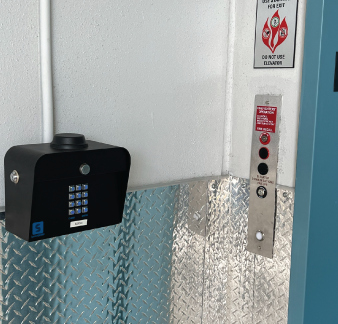
Hardware solutions form the backbone of any automated self-storage facility, providing the physical tools that control access, protect units, and ensure security. By integrating devices like keypads, sensors, and smart locks, operators can manage facilities more efficiently without needing to be on-site.
Remote Gate Access Systems
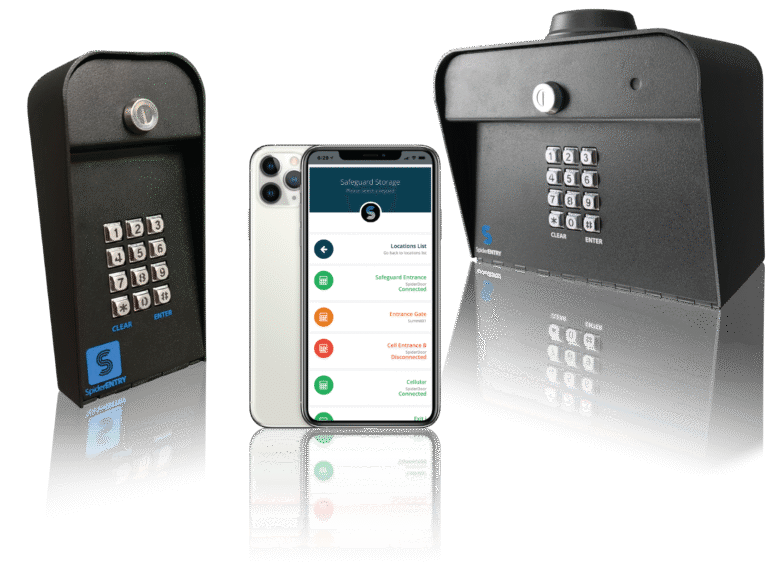
Access control keypads allow legitimate tenants to enter a self-storage facility, while keeping out anyone who doesn’t have a code. SpiderDoor’s access control keypads come with cellular, hardwired internet, or hybrid options, reducing the risk that your tenants will get locked out just because the Wi-Fi network went down.
Remote gate access systems provide secure, trackable entry; you know which tenants visit when because each unit’s gate code is unique. This reduces the need for staff to manually monitor gates, which saves time and cuts labor costs.
Smart Locks
Smart locks replace or enhance traditional padlocks with digital solutions that allow tenants to access units using apps, codes, or key fobs. For operators, smart locks simplify move-ins and move-outs since no physical lock changes are needed. They also eliminate costs tied to lost keys and rekeying. The streamlined process improves tenant convenience, reduces maintenance expenses, and speeds up unit turnover—directly translating into higher efficiency and ROI.
Automated Self-Storage Level 2: Software
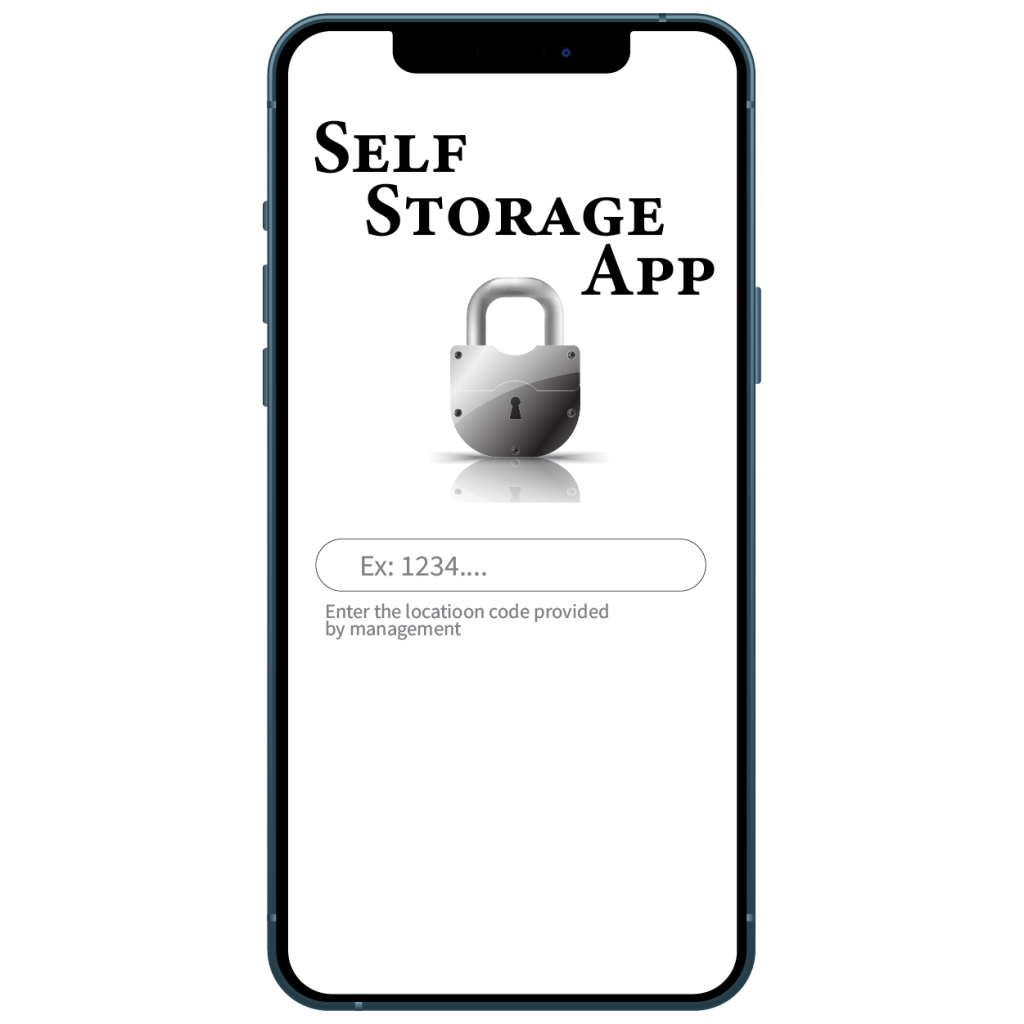
Software gives tenants and managers another way to interact with the self-storage facility besides in-person or over-the-phone communication. Using software to automate tasks like billing, access, and account management reduces administrative work, lowers costs, and creates a seamless experience for tenants.
Tenant Apps
Tenant apps give renters a way to manage their storage experience from their smartphones. They can rent units, make payments, open gates, and manage their accounts without direct staff involvement.
This means your front office doesn’t need to field as many questions (or the same questions over and over) and ensures tenants always have a convenient self-service option, so you can save money on staffing requirements while improving retention rates.
Manager Apps
Manager apps allow self-storage facility operators to oversee their facility remotely. From monitoring gate activity to reviewing access logs, managers can control operations from anywhere. This eliminates the need for constant on-site presence, reduces payroll expenses, and gives owners flexibility to manage multiple properties at once, improving overall profitability.
Automated Payment Collection Software
Automated payment tools handle reminders and collections through text, email, or automated phone calls. Tenants are prompted to pay before they fall behind, helping to stabilize your facility’s cash flow without requiring you to hound them for payment.
SpiderDoor’s Text Collector software automatically sends reminder texts to tenants or, if they’ve fallen behind, will send them a payment link when they are denied entry at the gate access keypad. For a more robust solution, SpiderDoor’s Debt Collector Suite incorporates text, email, and phone options to help tenants easily stay on top of their payments and make sure that their accounts stay current.
Property Management System (PMS) Integrations
PMS integrations bring together billing, rentals, access, and communication in a single platform. Instead of juggling multiple systems, operators can streamline workflows and access real-time data from one dashboard. This efficiency reduces errors, saves staff time, and provides insights that improve occupancy and pricing strategies—all of which boost ROI.
Cloud-Based Access Control for Self Storage
The SpiderDoor cellular keypad gives you cloud-based access control, connected to the cloud via a cellular connection plan that SpiderDoor provides. You can access your administrative program through any internet-connected computer or by using your mobile app. Some other gate access systems keep their security information on an on-site server.
The cellular keypad needs no office controller
The cellular keypad needs no extra hardware, software installations, or office controllers beyond the keypad itself.
Open the gate and add master codes from your phone
With the manager app you can open the gate from anywhere you have wi-fi or a cell signal. You can add master codes and check gate activity there, too.
Gate codes sync with your management software
SpiderDoor keypads automatically sync with popular self-storage management software. When a gate code is created in the management software, it’s automatically sent to the SpiderDoor keypad. When a tenant is moved out in the management software, the code comes off the keypad when the facility next auto-syncs with the software. How fast a code change reaches the keypad depends on the management software, not on SpiderDoor. When an account goes past due, the management software shuts off the gate code until the balance clears.
See how SpiderDoor handles gate codes for tenants who have not paid.
What happens when the internet goes out
A hardwired keypad stores tenant codes in the keypad itself. If the facility’s internet connection drops, tenants with a hardwired keypad can still enter their codes and the gate still opens. Anything that needs a live connection to the management software stops working until the connection is restored. That includes changing a code remotely, adding or removing a tenant, and opening the gate from an app. A cellular keypad doesn’t rely on the facility’s internet at all, so an internet outage at the building has no effect on it.
Read what happens when the internet goes out.
Automated Self-Storage Level 3: AI
Artificial intelligence is rapidly transforming the self-storage facility scene. AI-powered tools help facilities deliver 24/7 support, maintain strong reputations, and make smarter operational decisions.
AI Voice Agents & Call Centers
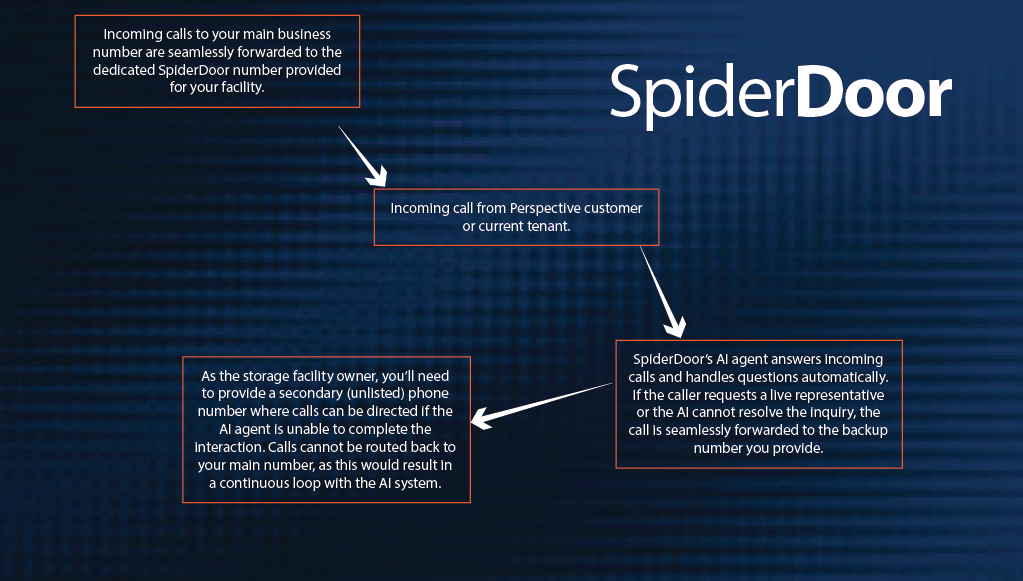
AI voice agents (whether a standalone program or through an AI call center) are one of the most powerful ways to reduce costs in an automated self-storage facility. They answer tenant calls automatically, providing accurate information about unit availability, business hours, payments, and gate access. This ensures tenants receive immediate responses while freeing staff from routine calls. Reduced missed calls mean fewer lost rentals, while the lower demand for call-center labor saves money and improves margins.
Automated Reputation Management
Your online reputation is a core part of how you get new tenants. AI-powered reputation tools help you grow your online reviews by automatically requesting reviews from tenants at key moments like move-ins and move-outs. They also track reviews across platforms and alert managers to potential issues. By keeping reviews fresh and positive, facilities improve SEO rankings, attract more renters, and reduce the marketing costs associated with acquiring new tenants.
AI-Powered Analytics
AI analytics process data from rentals, payments, occupancy, and customer behavior to provide actionable insights. Operators can predict demand, adjust rates, and optimize unit mix more effectively. Smarter decision-making reduces vacancy, increases pricing power, and ultimately improves profitability while keeping operating costs steady.
How to Automate Self-Storage: Getting Started
The first step in setting up an automated self-storage facility is identifying your biggest operational pain points—whether it’s staffing, payment collection, or security—and introducing the right technology to solve them. From there, you can expand automation gradually by adding more tools that integrate with your existing systems.
By adopting hardware, software, and AI solutions, operators build facilities that run more efficiently, cost less to manage, and provide a better experience for tenants—building a foundation for long-term growth, lower operating costs, and a facility that runs more efficiently every day.
Automated Self Storage FAQs
What does it cost to automate a self-storage facility?
The cost of automating a self-storage facility varies depending on which technologies you adopt first. Entry-level upgrades like access control keypads or tenant apps are relatively affordable, while full integration of hardware, software, and AI requires a larger investment. Many operators find that automation pays for itself quickly through reduced labor costs and more consistent revenue.
What is the average ROI for self-storage?
Industry data shows that self-storage is already one of the most profitable real estate sectors, with ROI often ranging from 8%–12%. By layering in automated self-storage tools, facilities typically see even higher returns thanks to lower operating costs, fewer delinquencies, and improved tenant retention.
Can small or independent storage facilities benefit from automation?
Absolutely. In fact, automation often has the biggest impact on small and independent facilities, where every staffing dollar counts. By adopting tools like automated payments or cloud-based access control, smaller operators can reduce overhead, increase efficiency, and compete effectively with larger chains.
Which automated self-storage tools save the most on operating costs?
The tools with the biggest cost savings are access control systems, automated payment collection, and AI voice agents. Together, they reduce staffing needs, cut time spent on collections, and eliminate missed calls that could lead to lost rentals. Over time, these savings directly improve profitability and free up resources for growth.
How does automation improve efficiency for facility managers?
Automation handles repetitive tasks like granting gate access, processing payments, and answering routine tenant questions. This means managers spend less time on administrative work and more time focusing on higher-value activities such as marketing, property upkeep, and customer relationships. The result is a leaner, more productive operation.
Can automated self-storage systems integrate with my current software?
Yes. Most modern automation tools are designed to integrate with leading self-storage property management systems (PMS). This makes it easy to connect access control, payments, and communication into one streamlined platform, saving time and reducing the chance of errors.
What’s the first step to creating a fully automated self-storage facility?
Start by identifying the area that creates the most cost or inefficiency for your facility—whether it’s staffing, collections, or security. From there, adopt one technology that solves that pain point and expand gradually with tools that work together. Step by step, you’ll build an automated self-storage facility that runs more efficiently and costs less to operate.